Equality, Earth Day and the power of nuance
Lucy Aphramor explores why climate is a social justice issue, looking at how it is intertwined with issues about disability, racialisation, and more.
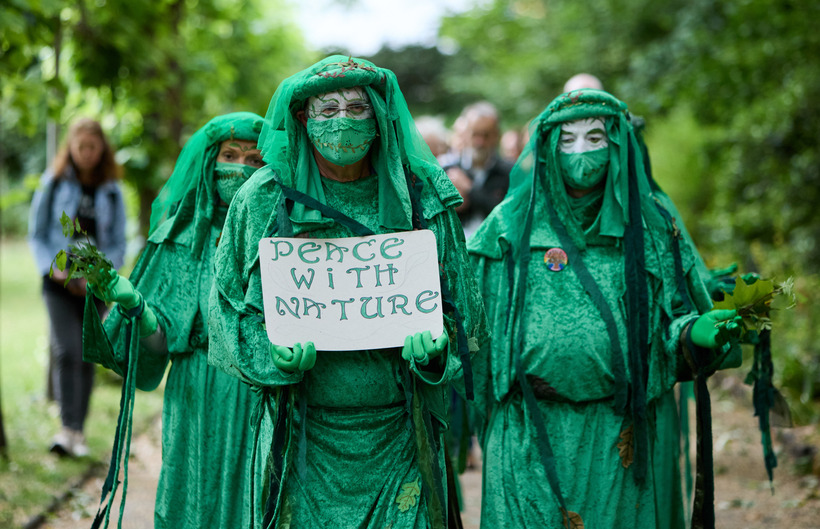
Launched in the US in 1970, Earth Day exists to broaden, educate and activate the environmental movement worldwide. Early initiatives raised public awareness about the inextricable links between pollution and public health and resulted in significant new legislation. Education and action on recycling, global warming, sustainable green economies, and carbon footprints followed.
Today environmental and climate justice work increasingly foregrounds the message that the impacts and drivers of earth desecration are inseparable from issues of social and racial justice and war. This is an important analysis: understanding climate justice and migrant rights as entwined, for example, can prevent us from contributing to unintended harm.
Climate is a social justice issue
As a social justice issue, climate crisis strongly intersects with racialisation and disability. Low-income, disabled, Global Majority and other marginalised communities are disproportionately impacted by air and water pollution from landfills, traffic, militarism, and toxic industry, and from land loss and ecosystems destruction due to rising sea levels and war. Indigenous populations are threatened by agendas that prioritise 'wellbeing', imperialism, and profit over indigenous rights to land and life.
Root cause and binary thinking
Injustice requires a group to believe they are separate from and superior to another group (or nonhuman nature) that they are therefore entitled to exploit.
When we categorise the world as good and bad through division and hierarchy like this, we are using binary thinking. Binary thinking sorts the world into unequal oppositional pairs: human nature and nonhuman nature; male and female; white and black; healthy and unhealthy; cis and trans; mind and body, and so on. In colonial binary thinking, inequality is inherent – one of the pair is cast as innately superior, ideal. The partner is cast as not fully worthy of life, or othered.
This divisive way of thinking locks us into a system of oppressive beliefs, assumptions, and values. It conditions us to imagine separation as normal and inevitable, and makes some people seem more worthy of life and ease and power than others. It embeds anthropocentrism, the belief that humans are apart from and dominate over nonhuman nature – a root cause of climate injustice.
Who are we missing?
The good/bad split of binary thinking removes complexity and creates the belief that there is one right way of doing things. Often, the so-called 'right way' benefits people in power and neglects marginalised people.
Take plastic straws and sustainability, for example. A ban on selling most single-use plastic items was enforced in England in 2023 for eco-friendly purposes. As disability rights lawyer Abigail Pearson says in her Greenpeace blog, "This was a confusing day for disability equality in the United Kingdom". That's because some disabled people need plastic straws to drink at all, to drink safely, and/or to drink independently. For the record, metal, paper, and bamboo straws are no substitute, as Jessica Kellgren-Fozard shared in ministry at Yearly Meeting in 2019.
Abigail gives a rounded view of what's at stake for disabled people when plastic straws are hard to get. Hydration, yes, and also dignity, and everything involved in drinking as a social activity.
Outlawing straws to tackle plastic pollution is an easy win for public relations that barely inconveniences and certainly doesn't jeopardise non-disabled lives. Likewise it has very little impact on overall plastic waste reduction.
Its big, disastrous, impact is on disability justice. Campaigning for 'no straws' as the one right way creates a vigilante vibe that pressures disabled people into justifying their behaviour to avoid potential hassle. As with other messages that emerge from binary thinking and disconnect it supports a techno-fix approach to climate crisis that has grave implications for racial and social justice.
That's a lot to consider – what can we do?
Some small ways that I changed my approach to undo binary thinking in my own life and practise as a dietitian are to Add a third example, probably; Be wary of ranks (like positive and negative); Consider 'non' choices carefully (non- often creates a binary); Divest from conquest, including the need to be right; and remember that Emancipation needs inspirited and thoughtful action.
I learned a lot from Tema Okun, who links binary thinking to the hallmarks of white supremacy culture and explains how it underpins perfectionism and 'oppression Olympics'. Two stand-out features for me in Tema's work are that she provides antidotes and shares passages by other activists that help make sense of her insights in everyday situations.
Finally, climate action too often disregards disability justice so I'll leave you with a few pointers for further reading:
- There is no climate justice without disability justice
- Disability-Inclusive Climate-Guide (PDF) (aimed at UK funders but generally useful for glossary and information)
- Disability Climate Justice (USA)
- Unequal climate justice for people with disabilities (PDF) (from UK with international scope)