
Quaker pacifist seized off Kyiv street
Update: 23 March 2026. Quaker and conscientious objector Yurii Sheliazhenko has been released from military custody in Ukraine after being forcibly detained last Thursday. Yurii was beaten, pepper-sprayed, dragged by his feet and hair and humiliated during his detention.
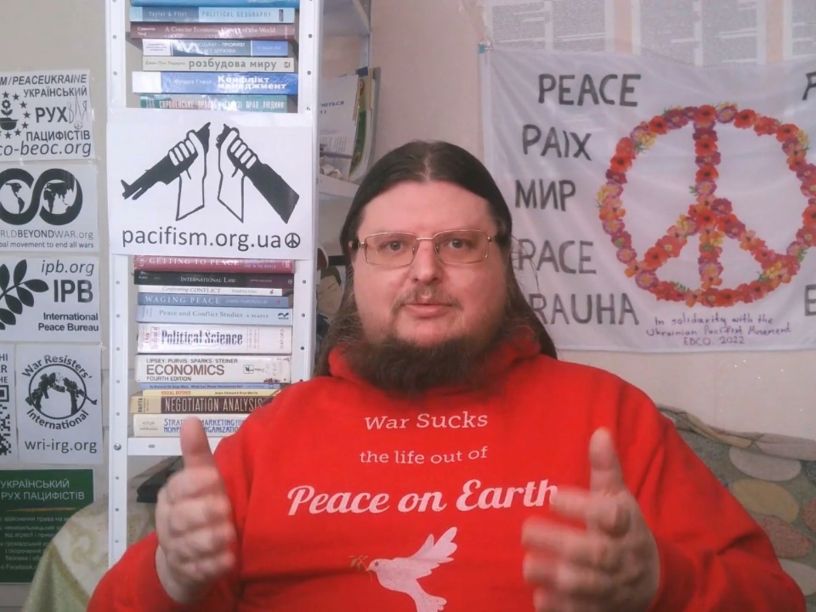
20 March 2026: Quaker and conscientious objector Yurii Sheliazhenko was forcibly detained on the streets of Kyiv yesterday evening [19 March] and is now being held in military custody.
Supporters say his detention is illegal, carried out without proper legal basis or the procedural safeguards required under Ukrainian law.
Siobhan Haire, deputy recording clerk for Quakers in Britain, said: “We are deeply concerned for the welfare of our friend Yurii Sheliazhenko and we call on the Ukrainian government to respect the rights of conscientious objectors."
[QUOTE-START]
We call on the Ukrainian government to respect the rights of conscientious objectors
- Siobhan Haire, deputy recording clerk
[QUOTE-END]
The general secretary of the Ukrainian Pacifist Movement is being held by Ukraine's military conscription authority, the Territorial Center of Recruitment and Social Support (TCC).
Ukraine's own Human Rights Commissioner has stated that TCC officers have no legal power to detain citizens without a court order.
TCCs have been criticised by the Ukrainian public and human rights activists for illegal detentions, corruption, and errors in documentation.
Sheliazhenko is believed to have been charged with "justifying Russian aggression", based on a statement that explicitly condemns it.
His case has been raised by UN special rapporteurs on freedom of religion, peaceful assembly, and minority issues.
And Amnesty International flagged it in its 2023 global human rights survey, warning that freedom of expression is under threat in Ukraine.
Quakers in Britain have unequivocally condemned Russia's war of aggression. But they stress that the right to conscientious objection cannot be suspended, even in wartime.
It is guaranteed under the International Covenant on Civil and Political Rights and the UN Universal Declaration of Human Rights, treaties to which both Ukraine and Russia are party.
Ukraine and Russia are both party to these agreements, but the right to conscientious objection remains precarious in both states.
Quakers believe there is "that of God" in every person, a belief that has led the movement to oppose war and uphold the right of conscience since its founding in 17th-century England.