Sam Sharpe, truth-telling and repair
For Black History Month, Esta Nyeko-Lacek considers the story of Sam Sharpe, leader of a rebellion against enslavement, and what Quakers can learn from it.
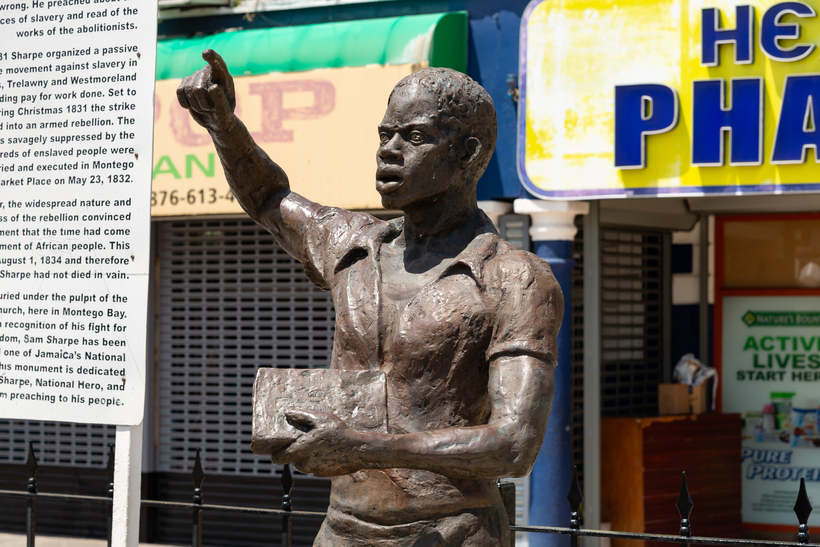
Sam Sharpe was born into enslavement in Jamaica around 1801. Grounded in Christian faith and a profound belief in equality before God, he challenged the inhumanity of enslavement and became a leader of liberation, resilience and collective action. This Black History Month, I want to reflect on Sharpe's life and witness: his faith, his leadership and his enduring legacy for all who seek truth, justice and repair.
Black history is not confined to one month, nor is it only a subject for books, lectures or archives. It is a living inheritance: educational, social and spiritual. It shapes the world we live in today, asking us what we have learned, what we have refused to see, and what we are prepared to repair.
Why Sam Sharpe matters now
As Quakers in Britain prepare for important conversations about truth and reparations, Sam Sharpe's story offers both inspiration and challenge. The Truth and repair conference on 23 October is intended to help Friends prepare for these conversations ahead of Yearly Meeting in November. Many will hear, some for the first time, about the historical involvement of British Quakers in the trafficking of Africans across the Atlantic, colonialism, and the theological arguments used to uphold systems of oppression. They will also encounter Quaker theologies of liberation, repair and justice.
These conversations ask us to take what we learn into our hearts and minds, and to remain open to how we may be called to participate in transformation. They ask us to confront silenced histories, challenge inherited narratives and join in a process of repair.
Truth-seeking and truth-telling are essential parts of reparative action. They also sit at the heart of Black History Month. For Quakers in Britain, this is especially important because a familiar story of Quaker abolitionism has too often obscured a less acknowledged history: Quaker involvement in African chattel enslavement, and the central role of enslaved people themselves in resisting enslavement and pioneering the struggle for freedom.
Faith that refused passivity
For Sharpe, divine justice and human equality were inseparable. The religious logic used to justify empire and enslavement had to be rejected and replaced by a theology of liberation. In the 2012 Sam Sharpe Lecture, Robert Beckford described this kind of political theology as one in which "the people of God stand against hierarchy, and power and the political economy that ravages the poor".
Sharpe became a Baptist deacon and preached against the violence and indignity of enslavement. Through faith, teaching and organisation, he worked not only for his own freedom, but for the freedom of all enslaved people.
The Christmas Rebellion and the struggle for freedom
In 1831, Sharpe organised a general strike. Enslaved people would refuse to work unless they were paid wages and treated with justice. When colonial authorities and plantation owners responded with force, the strike developed into what became known as the Baptist War or Christmas Rebellion: the largest uprising of enslaved people in the British Caribbean, involving as many as 60,000 people.
The rebellion was brutally suppressed, and Sharpe was executed in May 1832. Yet the scale of the uprising, and the severity of the colonial response, helped expose the violence at the heart of African chattel enslavement and contributed to the passing of the Slavery Abolition Act 1833.
Remembering Sam Sharpe during Black History Month therefore asks us to tell history truthfully. That means naming the harms of enslavement and colonialism, but it also means honouring the faith, agency and resistance of enslaved people who struggled for their own freedom.
From remembrance to repair
The annual Sam Sharpe Lecture, held each October to mark Black History Month and developed through Baptist partnerships in Britain and Jamaica, continues to explore how Sharpe's legacy speaks into contemporary struggles for justice. It reminds us that Sharpe, though enslaved, became an agent of transformation through Christian faith, compassion, justice and self-determination.
For Quakers in Britain, remembering such history should not be an endpoint. It must be an opening. Truth-telling is part of a broader reparative process that must also include material, political and structural change. It involves engaging honestly with both abolitionist history and complicity, supporting the transformation of educational and cultural institutions, and participating in ongoing dialogues about justice, repair and global inequality.
To remember Sam Sharpe truthfully is to rethink inherited narratives, confront uncomfortable histories and contribute to a more just future grounded in truth. His witness calls us beyond admiration and into action: to listen, to repent, to repair, and to help build the transformed world that justice requires.