Tending the fields: reparation reflections
Jenny Gant reflects on the Biblical parable of the weeds and what it might help us understand about addressing historical injustices.
My spirituality is tethered to Christianity – for better or for worse.
Because of this, passages of the Bible still speak to me in profound ways. The roots of my faith mean scripture remains a familiar language through which the Spirit of Truth continues to reach me.
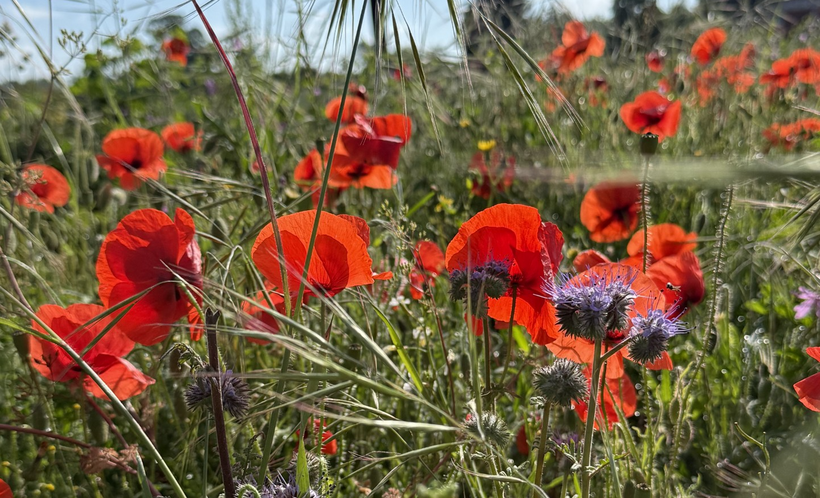
There have been times, however, when this tether felt more like a noose, chaffing with every movement. Reconciling my relationship with these roots has required curiosity, honesty and compassion.In Matthew 13 Jesus tells a story often referred to as the parable of the weeds. He likens the kingdom of heaven to a farmer who sowed his fields with good seed. During the night, an enemy came and sowed weeds among the wheat, and then went away. When the crop began to grow, the weeds appeared right alongside it.
The reaction of the farmhands was shock. How is this possible? Didn't you plant good seed? Where have these weeds come from?
The farmer replies without hesitation: An enemy did this.
The farmhands respond instinctively: Then lets pull them up!
The farmer slows them down: No because if you pull up the weeds now, you may uproot the wheat with them. Let them both grow together until the harvest, and then we'll sort them out.
Acknowledging harm
For a long time I was a lot like the farmhands. When I realised that the scaffolding of my religious past had hurt me, my instinct was to uproot everything. If weeds had grown among the wheat, then surely the whole field was contaminated. Better to burn it all to the ground and start again.
But healing isn't linear; it's cyclical, like tending to a garden throughout the seasons. Complete eradication isn't the goal, because in trying to remove every trace of harm, I would also lose the parts that nurtured, shaped, and sustained me.
Ignoring the weeds is not an option either. Left untended they can choke new growth, spread their seeds, and quietly reclaim the ground.
Healing then, becomes an ongoing practice of discernment: learning to recognise what gives life and what diminishes it; what deserves to be cultivated and what needs clear boundaries. It means acknowledging the harm without allowing it to define the whole field.
This work feels deeply resonant with the work of Quaker reparations.
Tending the ground
Like the farmer's field, our histories are rarely simple. The institutions, traditions, and communities that have shaped us contain weeds that have become deeply intertwined with the soil from which they grew.
Our instinctive response can be to look away and minimise their impact, claiming they have nothing to do with us: we didn't plant them in the first place, we might tell ourselves. Why should we be responsible for dealing with them now?
The farmer does not spend time assigning blame for who sowed the weeds. Instead, the question becomes how to tend the field responsibly now that their presence has been revealed. Life is too nuanced for a single scapegoat. The seeds of injustice are not carried by one enemy alone but are scattered through every human heart. The work of a lifetime is learning to recognise the weeds within ourselves, tracing them back to their roots, and tending the ground from which they grow. The work is never finished and so we cannot simply say, "It wasn't me." Truth seeking begins with us.
As Solzenitsyn observed, "The line separating good and evil passes not through states, nor between classes, nor between political parties either – but right through every human heart – and through all human hearts." Ignoring the weeds – sweeping historical complicity under the carpet – allows them to spread unchecked and their roots to remain alive beneath the surface. Yet attempting to erase the past altogether risks losing the wisdom, resilience, and humanity that have also emerged from that same soil.
The work of repair
Reparative work requires a different posture: one of truth-telling, discernment, and patient courage. It asks us to name the harm honestly, to understand how its roots continue to shape the present, and to cultivate something more just in its place. As bell hooks reminds us, "Rarely, if ever, are any of us healed in isolation. Healing is an act of communion." The work of repair is therefore not merely personal but collective, requiring us to remain in relationship with one another as we seek a more truthful and just future.
This is not passive acceptance, nor is it a call to preserve harmful systems. Rather, it is the ongoing work of tending the field – acknowledging what has been damaged, protecting what gives life, and taking responsibility for what we choose to grow next.
Find out more
If you would like to hear more about the work of the Reparation Working Group, and are interested in truth-seeking and truth-telling as reparative justice, come to our conference Truth and repair – our Quaker journey towards justice on 23 October at Friends House, London.
If area meetings or racial justice groups would like to learn more about the work of the Reparation Working Group and our plans for 2026/7 please invite us to make a visit to speak. You can also read the minutes of our most recent meeting which contain our plan for 2026/7 and a synthesis of what reparations might look like. Contact us via equity@quaker.org.uk