
Truth-Telling as Reparative Justice: The Haitian Revolution
19 January 2027, Online
What was the Haitian Revolution? Why is understanding it an important part of reframing the deeply damaging colonial story that situates agency amongst white people and side-lines Black people as passive victims? Why is this reframing important in moving towards repair?
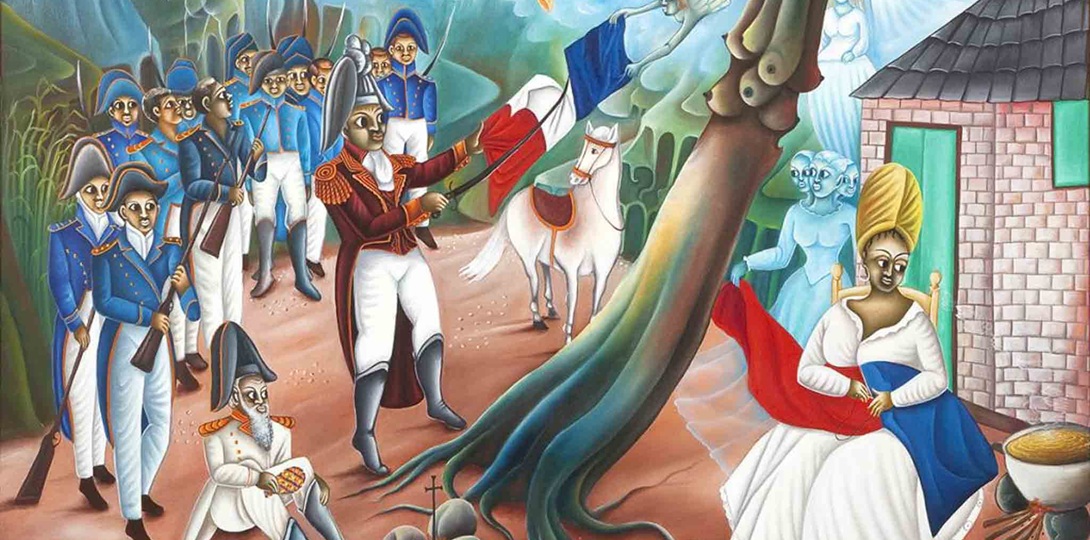
Dominant Quaker narratives in the UK have been of white Quaker abolitionists and now- much less comfortably- of white Quakers who were involved in the systems that enslaved and trafficked African people. Why is it important for Quakers to learn about the Haitian Revolution? How is this truth-telling a form of reparative justice?
Understanding history is not merely an academic exercise. When engaged with meaningfully, it becomes an educational, social, and spiritual practice that deepens our understanding of the world. Through a holistic engagement with the past, mapping memory, storytelling, and attentive listening, we can better orient ourselves in the present and more effectively respond to the demands of the future. Understanding Haiti is not only about obtaining knowledge. It is about undertaking an ethical and spiritual responsibility: to confront silenced histories, challenge inherited narratives, and participate in processes of repair.
In this session, we will hear from Esta Nyeko-Lacek, Reparations Coordinator for Quakers in Britain who will introduce the fundamental reparative pillar of truth-telling and explore why it is such an essential part of processes of repair and justice. Drawing on the history of the Haitian Revolution, Esta will explore how meaningful engagement with this history can contribute to processes of repair and justice.
After Esta's sharing we will have an opportunity for sitting with what we have heard in silence, to process it in small groups, and to come back together in a whole group to harvest our collective learning.
More information
For more information contact:
Woodbrooke Learning
Telephone: 0121 7282360